

Gentle yoga is more than movement. It’s a practice of connection—between body, breath, and awareness. When approached with intention, it becomes a form of meditation. A way to live the principles of Zen.
Zen teaches us to be present. To move through life with stillness, clarity, and acceptance. Gentle yoga brings those teachings into the body. It’s not about poses. It’s about presence.
Let’s explore how this slow, mindful practice can help you live with more peace and awareness—on and off the mat.
What Is Gentle Yoga?
Gentle yoga is a slow-paced form of yoga. It focuses on easy movements, deep breathing, and relaxation. It is not about pushing limits or building strength. It is about listening to your body and treating it with care.
Unlike fast or intense styles of yoga, gentle yoga includes:
Simple stretches and postures
Long, slow breaths
Time for rest and stillness
A non-competitive mindset
It welcomes all bodies and all levels. You don’t need to be flexible. You just need to show up with an open heart.
Gentle yoga creates space—for your breath, your thoughts, your emotions. That space is where calm begins.
Why Gentle Yoga Aligns with Zen
Zen is about awareness. It’s about seeing things as they are, without judgment. When you practice gentle yoga, you slow down enough to notice the present moment.
Zen and yoga both invite:
Stillness in motion
Accepting things just as they are
Mindful breath
Simplicity and non-attachment
During gentle yoga, you may notice how your body feels today—without needing it to change. You may observe your thoughts as they come and go—without chasing them. You stay present. You stay grounded. This is the heart of Zen.
If you're learning about mindfulness, gentle yoga can support the lessons shared in The Art of Being Present. Both practices help you return to the Now.
A Moving Meditation
Many people think meditation means sitting still. But movement can also be meditation—when done with awareness. Gentle yoga is often described as “moving meditation.”
You move slowly. You breathe deeply. You focus on sensations.
This helps quiet the mind. Instead of thinking about your to-do list, you focus on how your body feels. You notice the stretch in your spine, the air filling your lungs, the warmth in your hands.
With time, this awareness grows. You may feel more connected to your body, more grounded in the present, and more at peace with what is.
Benefits for Body and Mind
Gentle yoga supports both physical and mental well-being. Even a few minutes a day can make a difference.
For the body:
- Loosens tight muscles
- Eases joint stiffness
- Improves balance and mobility
- Enhances circulation
- Supports deep, healthy breathing
For the mind:
- Reduces stress and anxiety
- Improves mood and focus
- Helps manage overwhelm
- Encourages self-kindness
- Builds mindfulness
These gentle movements act like a reset. They soften the nervous system. They invite you to slow down and come back to yourself.
What a Gentle Yoga Practice Looks Like
You don’t need a fancy setup to practice gentle yoga. Just a quiet space, a mat or blanket, and a few minutes of time.
A short session might look like this:
1. Begin seated

Take a few deep breaths. Notice how you feel.
2. Neck and shoulder rolls
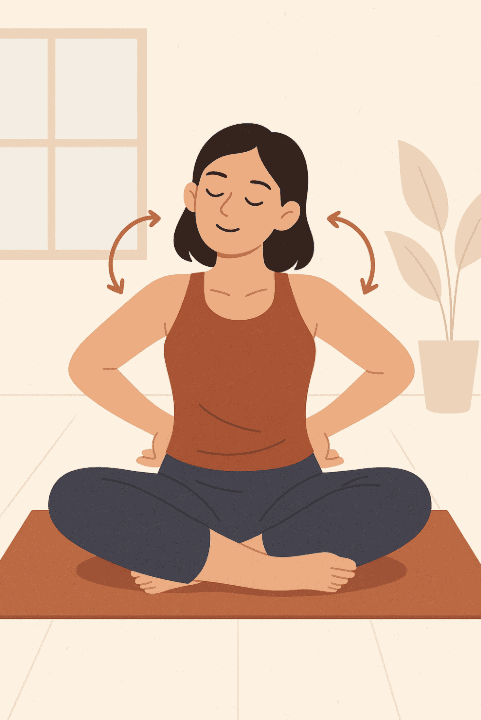
Sit comfortably on the floor or in a chair. Relax your shoulders. Begin with gentle shoulder rolls. Lift your shoulders up toward your ears slowly, then roll them back and down. Continue in smooth, gentle circles for several breaths. Reverse directions, rolling your shoulders forward and down.
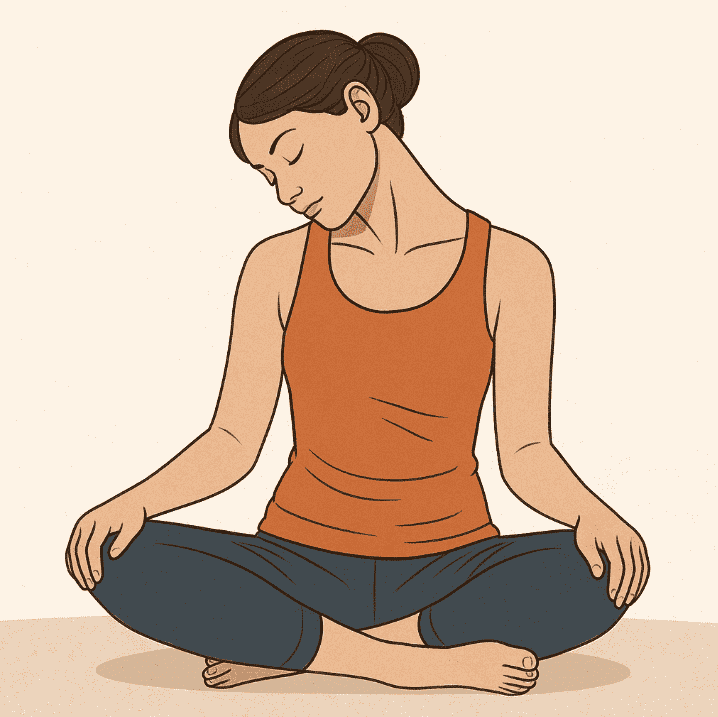
Next, gently drop your chin toward your chest. Slowly roll your head toward your right shoulder, pausing to notice any tightness. Breathe softly. Move your head slowly back toward your chest, then toward your left shoulder. Move with care, avoiding any pain
Breathing:
Inhale as your shoulders lift; exhale as you roll them down. When rolling your neck, breathe smoothly and gently without holding your breath.
How to Do It Right:
- Keep movements slow and gentle.
- Never force your head or neck; respect your natural range of motion.
- Stay mindful of your breath to maintain calm.
2. Gentle Twists (Seated or Lying Down)

Seated twist: Sit cross-legged or on a chair. Inhale deeply. As you exhale, gently twist your upper body to the right. Place your right hand behind you and your left hand on your right knee or thigh. Hold for a few gentle breaths. On your next inhale, slowly return to center. Repeat on the other side.

Lying-down twist: Lie comfortably on your back. Bend your knees, feet flat on the floor. Slowly let your knees fall to one side, keeping your shoulders flat on the floor. Turn your head gently in the opposite direction. Hold for several calming breaths, then slowly return to center. Repeat on the other side.
Breathing:
Inhale as you prepare, and exhale as you twist. Keep your breath steady and calm throughout the twist.
How to Do It Right:
- Move gently and carefully; never force your spine.
- Keep shoulders relaxed.
- Maintain a smooth, steady breath to deepen relaxation.
3. Cat-Cow Stretches

Start on your hands and knees. Your hands should be directly under your shoulders and your knees under your hips. Spread your fingers wide on the mat.


Cow pose: As you inhale, gently lift your head and chest, allowing your belly to drop toward the mat. Feel your spine gently arching downward.
Cat pose: As you exhale, slowly tuck your chin toward your chest and round your spine upward, pressing gently into your hands. Feel a gentle stretch along your back.
Continue moving slowly between Cat and Cow poses, guided by your breath.
Breathing:
Inhale into Cow pose, exhale into Cat pose. Move in harmony with your breathing, slow and fluid.
How to Do It Right:
- Listen to your spine; stay within a comfortable range.
- Align wrists beneath shoulders, knees beneath hips.
- Keep your movements smooth, not rushed.
4. Forward Folds

Sit comfortably on your mat, legs extended in front of you. Inhale deeply, lifting your chest gently upward. As you exhale, slowly hinge forward from your hips, reaching gently toward your toes or ankles. It’s fine if you can’t reach far—just relax your arms and shoulders forward. Allow your head and neck to relax completely, releasing tension from your upper body. Hold gently, breathing softly for several breaths.
Breathing:
Exhale as you fold forward. Keep breathing evenly and deeply as you hold the pose, softening with each exhale.
How to Do It Right:
- Fold from the hips, not your lower back, to protect your spine.
- Relax your neck and shoulders fully.
- Keep knees slightly bent if hamstrings feel tight.
5. Leg Stretches (with Strap or Towel)

Lie comfortably on your back. Keep one leg straight on the floor. Gently raise your other leg, looping a yoga strap, towel, or belt around the arch of your foot. Slowly straighten your raised leg, gently guiding it upward until you feel a comfortable stretch in your hamstring.
Hold gently, breathing calmly for several breaths. Switch legs, repeating the stretch carefully on the other side.
Breathing:
Inhale as you prepare, and gently exhale as you deepen the stretch slightly. Breathe slowly and evenly during the stretch.
How to Do It Right:
- Avoid bouncing or jerking your leg; keep movements gentle.
- Keep your back flat and shoulders relaxed on the mat.
- Only lift your leg as far as feels comfortable.
6. Final Rest (Savasana)

Savasana, or Corpse Pose, is traditionally practiced at the end of a yoga session to allow the body and mind to absorb the benefits of the practice. You lie flat on your back, legs extended, arms relaxed by your sides, palms facing upward. Your eyes are gently closed, and your entire body is supported by the ground. This pose looks simple, but it’s a powerful practice of conscious rest. The goal is not to sleep, but to be fully present with stillness—allowing your body to soften and your mind to settle.
Breathing:
Breathe naturally. Don’t control or deepen the breath—just observe it. Let your breath come and go like waves.
If your mind is busy, you can gently count your breaths or silently repeat “inhale” and “exhale” as a focus point.
How to Do It Right:
- The body should feel fully supported—adjust until you’re physically at ease.
- Let go of any need to move or “do.” This pose is about being, not performing.
- Stay present. If thoughts come, notice them and return to the feeling of your breath or the ground beneath you.
- Stay in Savasana for at least 3–5 minutes (longer if possible). Let your body fully settle into stillness.
Stay in each pose as long as feels right. Let go of effort. Let your breath guide the pace.
You might start with 10–15 minutes and build from there.
Yoga as a Daily Ritual
Gentle yoga is not a workout—it’s a ritual. A time to pause, check in, and reset.
You can make it part of your morning routine to begin the day with calm. Or you can practice in the evening to release tension and prepare for sleep.
Some people even do short stretches during work breaks. Just a few minutes of breath and movement can clear your head and renew your focus.
The key is consistency. Even a short daily practice builds a sense of rhythm. It becomes your anchor. Your return to presence.
How to Start (Without Pressure)
Starting a new practice can feel hard. But gentle yoga is forgiving. There’s neither perfect pose nor right way. Just you and your breath.
Here’s how to begin:
Set a small goal. Try 5 minutes a day.
Create a calm space. Light a candle, play soft music, or use silence.
Use a video or app. Look for beginner-friendly classes labeled “gentle” or “restorative.”
Stay kind to yourself. Skip poses if they don’t feel good. Rest when you need to.
You can also combine yoga with mindfulness. Take a few moments to reflect after your session. Ask: How do I feel now? What did I notice?
This habit of checking in deepens your connection—to your body, your breath, and the present.
Gentle Yoga and Minimalism
Yoga is not about more—it’s about less. Less striving. Less judgment. Less noise. This makes it a perfect companion to a minimalist lifestyle.
When you slow down, you start to notice what really matters. You may begin to let go—not just of physical clutter, but of mental noise and emotional weight.
That’s why gentle yoga is more than exercise. It’s a practice of simplicity, stillness, and enough.
A Quiet Return to Yourself
Gentle yoga offers a quiet way to return—to your body, your breath, and the life unfolding now.
You don’t need to be flexible, or to “do it right.” All you need is a few minutes and a willingness to be present.
In a world that moves quickly, this kind of practice is a gift. It helps you live with more ease. More awareness. More compassion.
Zen doesn’t ask you to change your whole life. It invites you to meet it fully.
One breath. One pose. One quiet moment at a time.


